Abstract
Earth system models run on supercomputers like Frontier at ORNL incorporate representations of processes spanning the atmosphere, ocean, land, sea ice, and land ice. Such processes include cloud formation in the atmosphere, ocean circulation, changes in soil moisture and snow (hydrology), growth of plants (ecosystem processes), movement of nutrients through soil and the atmosphere (biogeochemistry), and sea ice and glacier formation and melt. By combining the interactions and feedbacks among these and other processes, earth system models help scientists understand the drivers and effects of droughts, floods, and changes in land use and the chemical composition of the atmosphere, all of which may affect energy production and use and life on our planet.
Thanks to rapid technological advances in sensor development, computational capacity, and data storage density, the volume, velocity, complexity, and resolution of Earth system data are rapidly increasing. Using these growing volumes of data, machine learning (ML), data mining, and other approaches, often referred to collectively as artificial intelligence (AI), offer the promise for improved prediction and mechanistic understanding, as well as the path for fusing data from multiple sources into data-driven and hybrid models, comprising both process-based and deep-learning elements. In addition, the increasing complexity of Earth system models (ESMs) is driving a growing need for comprehensive and multi-faceted evaluation of model predictions across spatial and temporal scales.
For over a decade, the terrestrial modeling community has been developing diagnostic approaches for evaluating ESM hydrological and biogeochemical process representations through the International Land Model Benchmarking (ILAMB) package, an open-source benchmarking system that leverages the growing collection of laboratory, field, and remote sensing data. This benchmarking system performs comparisons of model results with best-available observational data products, focusing on biogeochemistry, hydrology, nutrients and soil organic matter, ecosystem processes and states, and vegetation dynamics.
To advance understanding of biogeochemical processes and their interactions with hydrology under conditions of changes in extreme events and atmospheric composition, new methods are needed that use observations to constrain model predictions, inform AI and process-based model development, and identify needed measurements and field experiments. I will summarize a variety of Earth characterization, uncertainty quantification, and model prediction approaches for addressing questions relevant to society. In addition, I will discuss the current state of model evaluation capabilities employed for ESMs and describe an international data infrastructure, called the Earth System Grid Federation (ESGF), which archives and distributes ESM model output and related forcing and observational data.
Biographical sketch
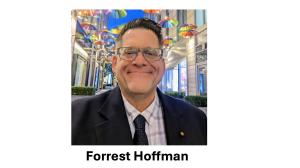
Forrest M. Hoffman is an ORNL corporate fellow, a computational earth system scientist, and the group leader for the Integrated Computational Earth Sciences Group at ORNL. He is also a joint faculty professor in the University of Tennessee’s Department of Civil and Environmental Engineering, a senior member of the Institute of Electrical and Electronics Engineers (IEEE), and a fellow of the American Association for the Advancement of Science (AAAS). He holds Ph.D. and M.S. degrees in earth system science from the University of California at Irvine and M.S. and B.S. degrees in physics from the University of Tennessee at Knoxville.
Forrest develops and applies Earth system models (ESMs) to investigate global biogeochemical cycles and feedbacks between biogeochemical cycles and the Earth system. He is a leader in community model benchmarking activities and the development of the International Land Model Benchmarking (ILAMB) and International Ocean Model Benchmarking (IOMB) packages. He is particularly interested in applying machine learning methods to the exploration of the interactions of terrestrial and marine ecosystems with hydrology.
Forrest leads development and deployment of a next-generation Earth System Grid Federation (ESGF) distributed data infrastructure in the United States. In addition, he applies data mining methods using high-performance computing to problems in landscape ecology, ecosystem modeling, remote sensing, and large-scale Earth science data analytics.
Event Details
The UT Resource Center is at 1201 Oak Ridge Turnpike between Dairy Queen and Applebee's Grill. Use the entrance at the southwest (back) corner of the building.
A light lunch (half sandwich, chips, cookie, and a drink) will be available for a $10 donation (cash, check or IOU) starting about 11:15 a.m. on a first-come, first-served basis. Attendees may also bring food to eat.
Meeting Agenda
11:15 a.m. – Arrive at UT Resource Center to grab a light lunch or chat with colleagues
11:50 a.m. – Zoom attendees may login online until noon
12:00 p.m. – Talk begins following a few announcements and introduction of the speaker.
Zoom available about 11:50 a.m
https://us06web.zoom.us/j/88485714661?pwd=jjLc2XSZbbhBDFM5xapIfGi4uFBfQb.1
Meeting ID: 884 8571 4661 Passcode: 684910